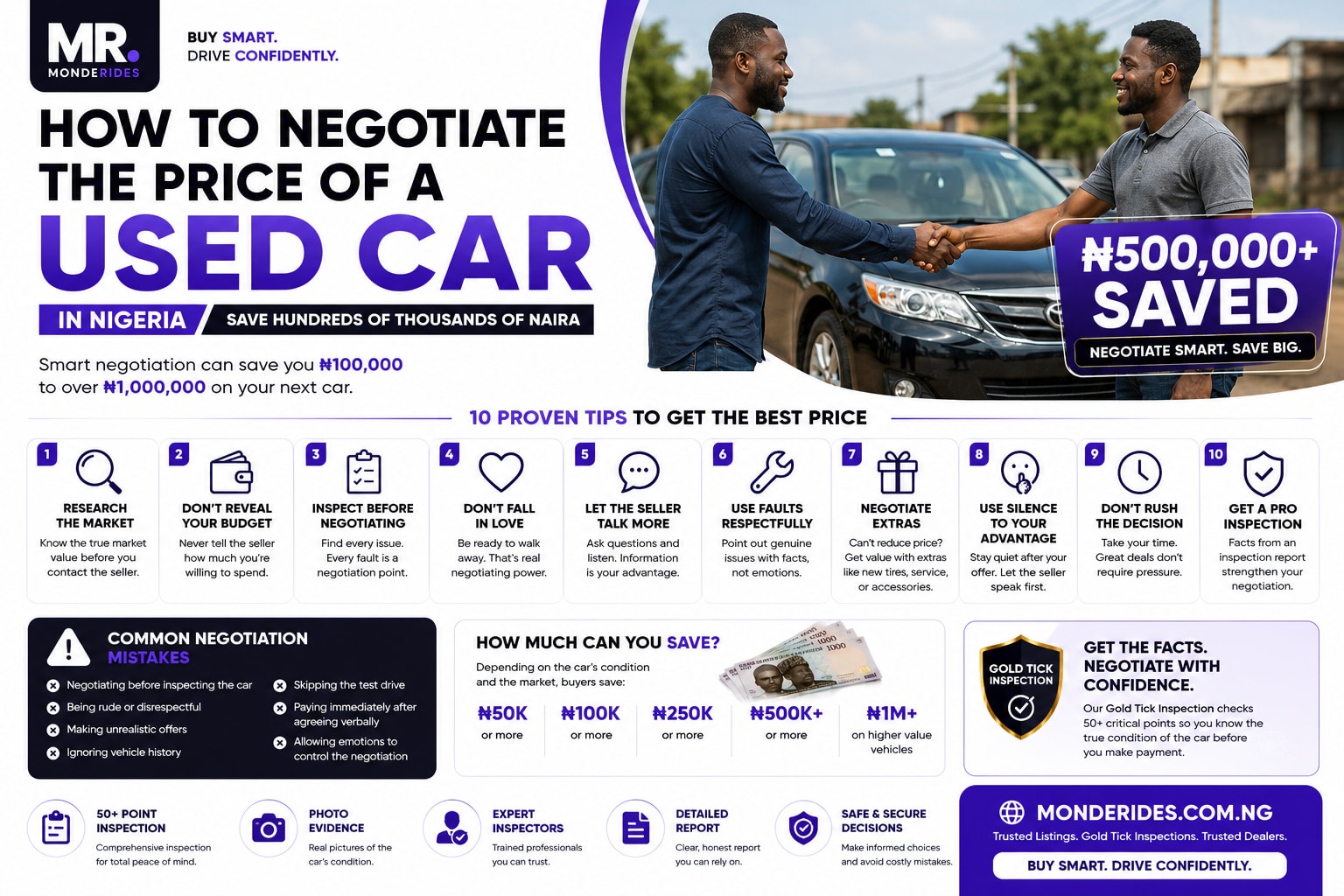
How to Negotiate the Price of a Used Car in Nigeria (Save Hundreds of Thousands of Naira)
Buying a used car isn't just about finding the right vehicle—it's also about paying the right price.
One mistake many Nigerian buyers make is accepting the seller's asking price without negotiating. In reality, most used car prices have room for negotiation, especially if you've done your research and inspected the vehicle properly.
Whether you're buying from a dealer, a car stand, or an individual seller, knowing how to negotiate can save you ₦100,000 to over ₦1,000,000, depending on the vehicle.
This guide explains practical negotiation strategies that actually work in the Nigerian used car market.
1. Research the Market Before Calling the Seller
Never negotiate blindly.
Before contacting a seller:
- Compare prices on multiple marketplaces.
- Look at similar model years.
- Compare mileage.
- Compare trim levels.
- Check vehicle condition.
When you know the average market value, you'll immediately recognize overpriced listings.
2. Never Reveal Your Budget First
One of the oldest negotiation mistakes is telling the seller exactly how much money you have.
For example:
❌ "My budget is ₦8 million."
Instead, ask questions first.
Let the seller justify the asking price before discussing your budget.
The less information you reveal early, the stronger your negotiating position.
3. Inspect the Car Before Talking About Price
Never negotiate based on photos alone.
Inspect:
- Engine
- Transmission
- Suspension
- Tires
- Paint
- Chassis
- Interior
- Electronics
- Air conditioning
- VIN Number
Every fault you discover becomes a negotiation point.
4. Don't Fall in Love With the Car
The strongest negotiators are willing to walk away.
Once the seller realizes you're emotionally attached, your bargaining power drops significantly.
Remember:
There are always other cars available.
5. Let the Seller Do Most of the Talking
Instead of arguing, ask questions.
Examples:
- Why are you selling?
- Has the car been in an accident?
- Is the price negotiable?
- How long has it been listed?
- Have many people come to inspect it?
The more the seller talks, the more useful information you gather.
6. Point Out Genuine Faults Respectfully
After inspecting the vehicle, mention any issues calmly.
For example:
- Tires need replacement.
- Suspension is worn.
- Paint has been redone.
- Brake pads are almost finished.
- Windshield has a crack.
- Air conditioning isn't cooling properly.
Don't exaggerate.
Use facts—not emotions.
7. Negotiate the Total Ownership Cost
Sometimes a seller won't reduce the asking price.
Instead, negotiate extras.
For example:
- Full tank of fuel
- New tires
- Oil service
- Registration renewal
- Spare key
- Floor mats
- Fire extinguisher
- Jack and toolkit
These additions can save you significant money after purchase.
8. Use Silence to Your Advantage
After making an offer...
Stay quiet.
Many buyers feel uncomfortable with silence and begin increasing their own offer.
Experienced negotiators wait patiently.
Sometimes the seller speaks first—and lowers the price.
9. Don't Rush the Decision
Pressure is a common sales tactic.
You may hear:
- "Another buyer is coming."
- "Today is the last price."
- "Someone already transferred money."
Maybe.
Maybe not.
If you're unsure about the vehicle, walk away.
A good car today doesn't disappear forever.
10. Get a Professional Inspection
Nothing strengthens your negotiation more than facts.
A professional inspection can reveal:
- Accident repairs
- Flood damage
- Engine wear
- Suspension problems
- Brake issues
- Chassis repairs
- Electrical faults
- Oil leaks
Instead of saying:
"I think something is wrong."
You can say:
"The inspection report shows the suspension needs replacement."
That's a much stronger negotiation position.
Common Negotiation Mistakes
Avoid these costly mistakes:
❌ Negotiating before inspecting
❌ Being rude to the seller
❌ Making unrealistic offers
❌ Ignoring vehicle history
❌ Skipping the test drive
❌ Paying immediately after agreeing verbally
❌ Allowing emotions to control the negotiation
Sample Negotiation Conversation
Seller: The price is ₦7.8 million.
Buyer: I like the car, but I noticed the front tires are worn, the rear bumper has been repainted, and the suspension needs attention.
Considering those repairs, would you accept ₦7.3 million?
This approach is respectful, logical, and supported by evidence.
How Much Can You Realistically Save?
Depending on the condition of the vehicle, buyers often negotiate:
- ₦50,000
- ₦100,000
- ₦250,000
- ₦500,000
- Even over ₦1 million on higher-value vehicles
The key is having evidence—not guesses.
Before You Make Payment
Always complete this checklist:
✅ Verify the VIN
✅ Confirm ownership documents
✅ Test drive the vehicle
✅ Inspect the engine
✅ Check the transmission
✅ Inspect the suspension
✅ Review the service history
✅ Confirm there are no hidden warning lights
✅ Get a professional inspection
Never transfer money until you're satisfied with the vehicle's condition.
Frequently Asked Questions
Is it rude to negotiate car prices in Nigeria?
No.
Negotiation is a normal part of buying and selling vehicles. Most sellers expect buyers to negotiate respectfully.
How much should I negotiate?
There is no fixed percentage.
The amount depends on the market value and the condition of the vehicle.
Use inspection findings—not random figures—to support your offer.
Should I negotiate before inspecting?
No.
Inspect first.
Negotiate second.
The inspection gives you legitimate reasons to request a lower price.
Final Verdict
Negotiating isn't about trying to "beat" the seller.
It's about ensuring the price accurately reflects the vehicle's true condition.
The best negotiators come prepared, remain patient, ask the right questions, and rely on facts rather than emotions.
By researching the market, inspecting the vehicle thoroughly, and negotiating respectfully, you can save hundreds of thousands of naira while avoiding expensive surprises after purchase.
Buy Smart with MondeRides
At MondeRides, we help you negotiate with confidence.
Browse trusted vehicle listings, connect with verified dealers, verify vehicle history, and book a Gold Tick Vehicle Inspection before making payment.
When you have the facts, you negotiate from a position of strength.
Buy Smart. Drive Confidently.
🎯 Key Takeaways
Learn proven negotiation strategies that Nigerian car buyers use to save money when buying a used vehicle. Discover what to say, what to avoid, and how to negotiate with confidence.